Investigation question
Can a machine-learning model trained on labelled laboratory data correctly classify handling events as impact, compression or vibration?
DSL project
Group 03 is building a sensor-instrumented avocado proxy and testing whether inertial measurement data can distinguish impact, compression and vibration events under controlled laboratory conditions.
Can a machine-learning model trained on labelled laboratory data correctly classify handling events as impact, compression or vibration?
The project aims to produce a working logging prototype, a labelled dataset, a reproducible feature-extraction pipeline and a classifier evaluation reporting accuracy, false positives, precision, recall and a confusion matrix.

Dylan Simpson is a final-year Information Engineering student at the University of the Witwatersrand, with a focus on machine learning, data-intensive computing and network fundamentals. He is as comfortable in a lecture hall as he is closing a deal, having built and run multiple ventures since high school (from service-delivery businesses to exotic animal trading) teaching him the fundamentals of sales, marketing and entrepreneurship. Dylan is a people-first entrepreneur who values face-to-face engagement and building lasting professional networks, at a time when most resort to a message. His current interest lies at the intersection of software, AI and medicine. He is drawn to problems that matter, solutions that scale and collaborations with like-minded people.
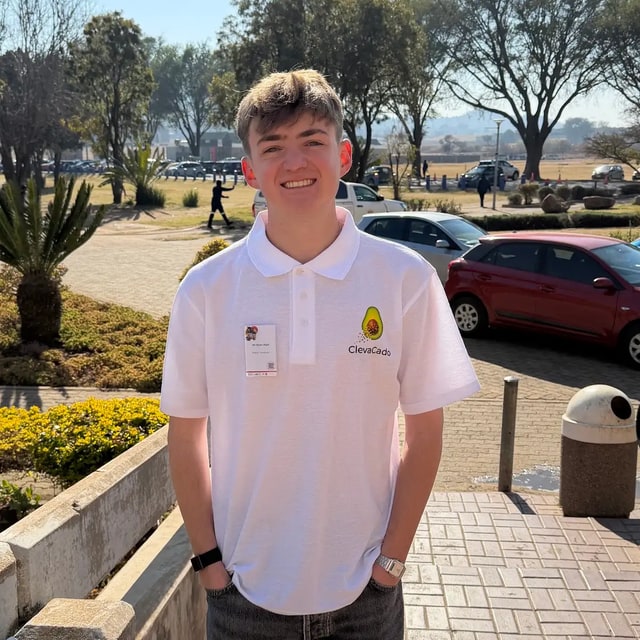
Dylan Walt is completing his Honours in Electrical and Information Engineering (Information Engineering stream) at the University of the Witwatersrand, Johannesburg. He works as an AI Engineer with experience across software development, AI systems, fintech, embedded technology, and product development, spanning full stack web applications, data driven financial wellbeing platforms, automation systems, IoT prototypes, and machine learning workflows. Through Velzee and other applied technology ventures, Dylan focuses on turning complex technical ideas into practical, deployable products that solve real business and user problems. His work sits at the intersection of AI engineering, applied software, and product development.