Internet of Light with power-line-backhauled visible-light communication

Group 04 is developing and characterising a low-cost Internet of Light prototype in which a commercial power-line link provides the backhaul and a visible-light link provides optical access. Separate power-line and visible-light tests will lead to a software-mediated packet-transfer demonstration.

Investigation question

How do selected power-line and optical channel conditions affect error performance, throughput, latency and link reliability in a low-cost power-line-backhauled visible-light communication system, and which subsystem limits end-to-end performance?

Intended outcome

The project aims to produce validated subsystem models, repeatable laboratory measurements and an integrated packet-transfer demonstration that identifies the channel or hardware conditions limiting the combined link.

Student profiles

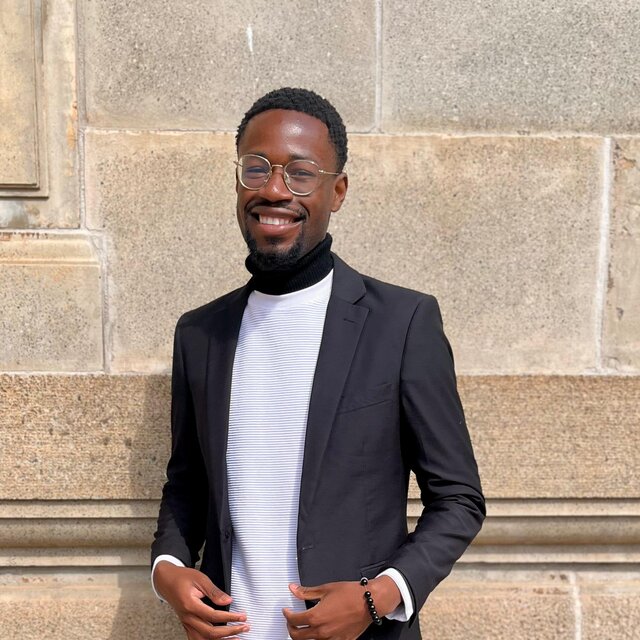
Nduvho E. Ramashia

I’m Nduvho Ramashia, an Electrical and Information Engineering student at Wits with a particular interest in control and instrumentation. I enjoy understanding how systems work, building practical solutions, and finding ways to improve them through a combination of hardware, software and experimentation. My current Investigation Project focuses on how power-line and optical channel conditions affect the performance and reliability of a low-cost power-line-backhauled visible-light communication system. In particular, I’m investigating the limits of power-line communication as a medium and the conditions under which it stops being a viable form of communication. Understanding these limits can help identify environments where its low-cost approach to data transmission is most useful. Outside academics, I enjoy gaming and playing music. I primarily play bass guitar, alongside keyboard and electric guitar, and I serve as a church music director, where I help prepare the team and troubleshoot equipment.

Portrait of Israel Chiloane

Israel Chiloane

I’m Israel Chiloane, an Electrical Engineering student at the University of the Witwatersrand with a strong interest in technology, communication systems, software development, data science and AI. I enjoy exploring how different areas of engineering can work together to solve real-world problems, especially when that involves combining hardware, software and a little bit of creative thinking. Alongside my studies, I’ve gained professional experience developing software and data-driven solutions, working across automation, analytics, reporting and problem-solving. These experiences have shaped me into someone who enjoys learning beyond a single discipline. Whether I’m working with electrical systems, writing code or analysing data, I’m always interested in understanding the bigger picture and finding a better way to approach the problem. My Investigation Project, “Internet of Light with Powerline-Backhauled Visible Light Communication,” is a great example of that. The project explores an alternative approach to connectivity by investigating how existing electrical and lighting infrastructure could also be used to communicate information. My focus is on the visible light communication side of the system, where I get to take an idea from theory and simulation all the way to building, testing and evaluating a working prototype. What excites me most about the project is that it brings together many of the things I enjoy about engineering. It requires experimentation, programming, electronics, data analysis and, inevitably, a fair amount of troubleshooting when the real world decides not to behave like the simulation. Ultimately, I see myself as a curious and adaptable engineer who enjoys learning, building and solving problems across disciplines. For me, engineering is not just about making something work. It is about understanding why it works, discovering why it sometimes doesn’t, and figuring out how to make it better.
Project Management

Return to Projects