
How To Use This Page

  1. Identify the technical centre of your idea: a system, dataset, simulation, intervention, protocol, tool, or learning process.
  2. Match that centre to one or two likely research homes below.
  3. Bring a sharper research question, evidence route, baseline, and contribution claim to your next discussion.

Dr Shamin and Dr Dangor

After Prof. Ling's senior research leadership, these two sections help you locate the communication, engineering education, renewable-energy, development-economics, AI-literacy, and technology-transfer routes inside DSL.

Supervisor Fit

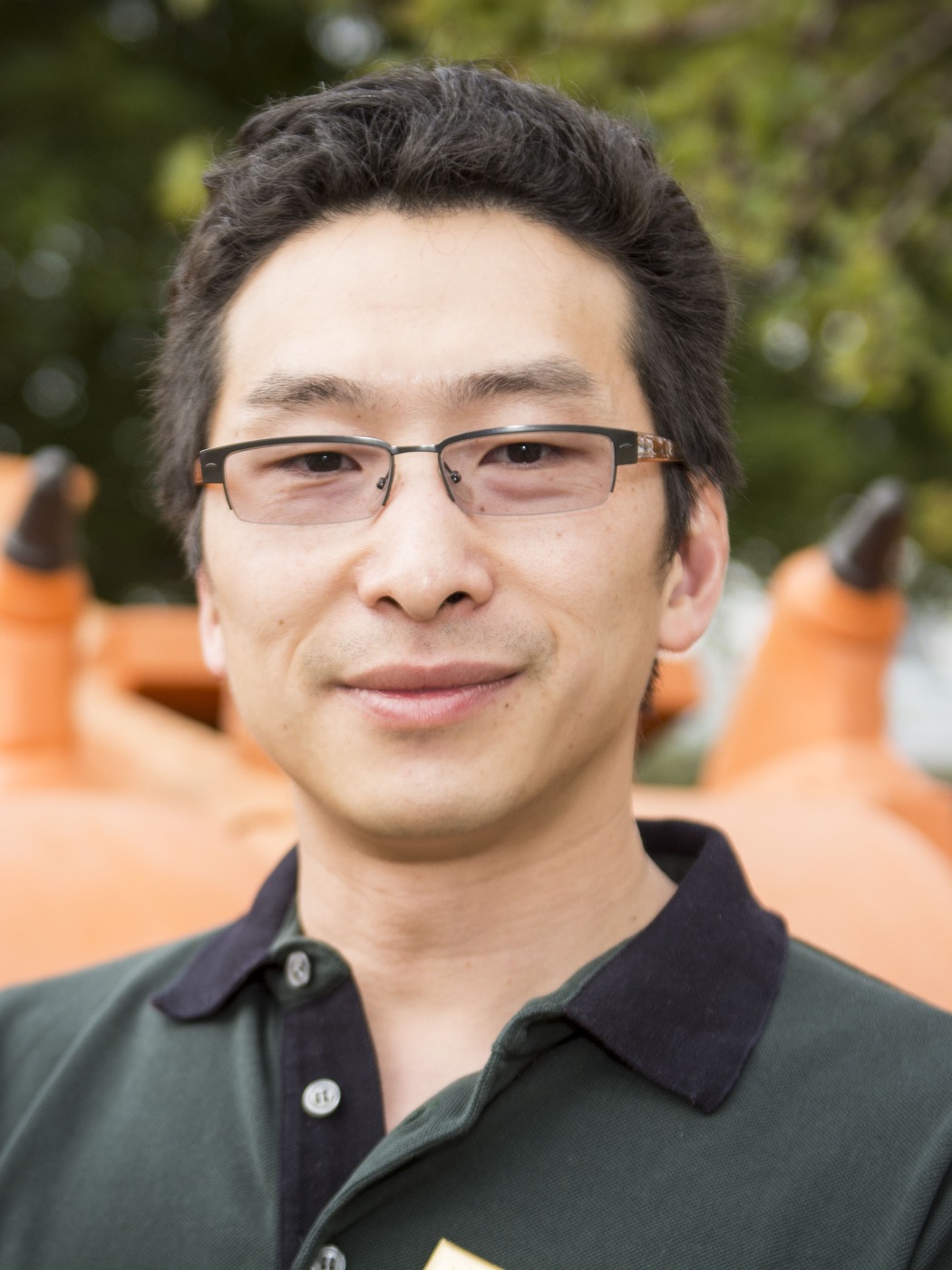
Dr Shamin Achari

Optical wireless communication, visible light communication, and coding

Dr Shamin's research fit is strongest where a project has a clear communication-system centre: visible light communication, optical wireless links, channel behaviour, coding, signal processing, reliability, or physical-layer implementation.

Good fit if your project is about...
  • Visible light communication and optical wireless communication link studies.
  • Channel modelling, modulation, coding, signal processing, or reliability analysis.
  • Communication experiments or simulations with a clear performance metric.
  • Hardware-aware or implementation-aware studies where the trade-off can be measured.
You need to clarify...
  • Which communication function, channel condition, or coding problem are you actually testing?
  • What baseline method or existing link model will you compare against?
  • What metric matters most: throughput, error rate, latency, robustness, resource use, or energy?
  • What equipment, simulation route, or dataset can you realistically access?
Avoid overclaiming...

Avoid broad communication-system proposals with no channel, protocol, benchmark, or measurable performance question. The narrower the function, the easier it is to make the research contribution visible. His public research trail is especially useful for channel modelling, synchronisation errors, coding, visible light communication, optical wireless links, and smart-grid AI.

Open-access papers to look up...

Supervisor Fit

Dr Mohammed Raees Dangor

Engineering education, renewable energy, development economics, AI literacy, and technology transfer

Dr Dangor's supervision fit sits at the intersection of engineering, access, AI capability, and human development. His work includes engineering education and academic-friction removal, renewable-energy and off-grid power systems, development-economics style measurement of exclusion such as energy poverty, online learning poverty, and the AI divide, and applied research into emergent behaviour in AI systems.

Good fit if your project is about...
  • AI-enabled tools for teaching, feedback, assessment, or student support.
  • AI literacy, agentic workflows, prompt engineering, coding agents, and the practical use of desktop or web AI tools for research, writing, software building, and project management.
  • Jonga-style AI systems where autonomous agents or denizens interact, evolve, form relationships, generate artefacts, and produce behaviour that must be observed rather than directly controlled.
  • Academic workflow platforms such as timesheets, lab marking, seating allocation, deferred applications, assessment queries, or WIL tracking.
  • Engineering education reform, student success, responsible AI use, academic integrity, and access to learning.
  • Renewable-energy systems, PV power conversion, off-grid DC microgrids, rural electrification, and energy-access engineering.
  • Development-economics questions about who is excluded from electricity, online learning, AI tools, and the capabilities needed to benefit from technology.
  • Multidimensional measurement work where poverty, access, or exclusion is measured across more than one dimension instead of reduced to a single yes-or-no variable.
  • Technology-transfer routes where a useful research tool may become a sustainable workflow or company pathway.
You need to clarify...
  • What point of academic friction, energy-access constraint, or technology-access divide are you studying?
  • Who experiences it, and how do you know it exists?
  • If AI is central, what behaviour do you expect to emerge, what will you log, and how will you separate useful autonomy from uncontrolled noise?
  • Are you studying the tool, power system, or access measure itself, or what it reveals about learning, support, fairness, affordability, workload, capability, or institutional practice?
  • What evidence can you collect after ethics clearance or appropriate permission?
Avoid overclaiming...

Pay Me Bro and the Five E Framework are current academic-friction and AI-assisted tool-development routes. Jonga is Dr Dangor's application and research route into AI emergent behaviour: a living world of AI denizens where humans create and then observe rather than directly command. Dr Dangor also supports Prof. Ling and Dr Shamin by bringing AI capability into research planning, student support, writing, software workflows, and operational systems. The MSc experience with him deliberately upskills students in AI literacy and agentic tool use at the level they have seen during the DSL sprint, while still requiring students to think, write, verify, and own the work themselves.

Starting papers and applications to look up...

Research-Area Map

Use this table to locate your idea, then narrow it into something testable.

Research Area Likely Fit You Must Define Common Trap
Engineering education and academic friction Dr Dangor The affected users, current process, evidence route, and change worth measuring. A tool without evidence, or a product pitch without a research contribution.
AI-assisted educational tools Dr Dangor, with DSL input where needed The task boundary, user group, baseline, ethics route, and how usefulness or harm will be judged. Saying AI improves learning before defining the learning outcome.
AI literacy, agentic workflows, and emergent behaviour in AI systems Dr Dangor, with DSL input where needed The AI system, human role, autonomy boundary, behavioural signal, logging route, and benchmark for useful or risky emergence. Calling a workflow intelligent without showing what behaviour emerged, how it was measured, and what the human still controlled.
Development economics, access measurement, and the AI divide Dr Dangor The population being excluded, the access dimensions being measured, the data route, and the policy or design decision the measure should inform. Treating digital access as a yes-or-no problem instead of a multidimensional question of affordability, reliability, capability, duration, usefulness, and power.
Renewable energy, off-grid systems, and energy-access engineering Dr Dangor, with Prof. Ling where smart-grid optimisation is central The energy-access problem, load profile, power architecture, control method, affordability constraint, and the evidence that shows the design improves access. Designing a power system without asking who it serves, what access gap it closes, or what trade-off makes it suitable for a constrained community.
Optical wireless and visible light communication Dr Shamin, Prof. Ling The channel model, hardware or simulation route, performance metric, and comparison baseline. A broad wireless system with no measurable communication problem.
Coding and communication-system implementation Dr Shamin, Prof. Ling The one function being tested, the expected bottleneck, and the metric that shows whether the method helps. Letting the toolchain become the project instead of the evidence.
Smart grids, renewable energy, and optimisation Prof. Ling, with DSL support where useful The site or simulated system, controllable decisions, input data, objective function, and benchmark rule. Optimising a generic system without a local constraint or reusable lesson.
IoT, digital twin, and facility management Prof. Ling, with DSL support where useful The physical system, data loop, model boundary, baseline, and decision the twin is meant to improve. Calling any dashboard or simulation a digital twin without data, calibration, or decision purpose.
Quantum communication or computing exploration Prof. Ling, confirm scope early The exact quantum-adjacent concept, prerequisite knowledge, simulation route, and smallest defensible question. Using quantum as a label before the project has a method or feasible evidence path.

Before You Claim Fit

  • What is the real technical object: system, dataset, simulation, intervention, protocol, or learning process?
  • What evidence can you realistically collect in a Master's timeline?
  • What baseline will you compare against?
  • What claim will you deliberately avoid making?
  • Which supervisor's area gives the strongest intellectual home, not just the closest buzzword?

Possible Outputs

  • A journal or conference paper with a clear research question and evidence.
  • A prototype, workflow, controller, model, dataset, dashboard, or framework.
  • A technology-transfer or commercialisation route if the work creates value beyond the dissertation.
  • A policy, teaching, or practice contribution that helps a department, lecturer, student-support unit, facility, or user group.

Bring This To The Next Discussion

Do not arrive with only a topic label. Arrive with the shape of the research.

1

Problem

The friction, technical gap, or system behaviour I want to study is...

2

Evidence

The data, simulation, site, experiment, or user feedback I can use is...

3

Baseline

The simple method, current workflow, or existing model I can compare against is...

4

Contribution

The thing another researcher, engineer, lecturer, or user group could learn from this work is...

Engineering vs Research

Use this if your idea still sounds like a build rather than a research question.

Open

How to Revise

Use this when you are ready to rewrite the NRF draft in your own words.

Open

Submit Revised Draft

Submit the version the DSL team must review before NRF Connect.

Open

Important Boundary

This page does not allocate supervisors, confirm a topic decision, or replace a discussion with the DSL team. It gives you language for thinking. Private discussion notes, candidate judgements, and staff-only routing are not published here.